
Ecommerce Explained: Types of Ecommerce in the Online Market
Ecommerce, or electronic commerce, means buying and selling products or services online. With the growth of the internet and digital payments, ecommerce has become one of the most popular ways to do business today. From shopping for clothes to paying bills and booking services, ecommerce makes everything faster and more convenient.
In this blog, we will explain what ecommerce is and the main types of ecommerce in the online market.
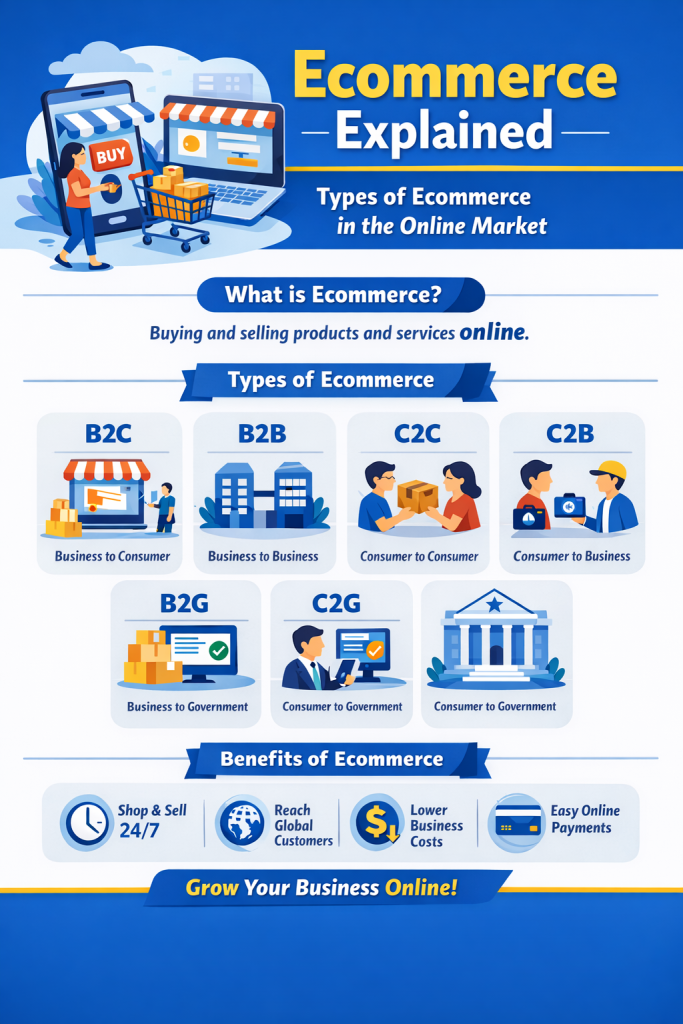
What Is Ecommerce?
Ecommerce is the process of selling and purchasing goods or services through websites, mobile apps, or online platforms. Customers can browse products, compare prices, make online payments, and get items delivered to their home or access digital services instantly.
Ecommerce helps businesses reach customers worldwide and allows buyers to shop anytime, anywhere.
Types of Ecommerce in the Online Market
There are different types of ecommerce models based on who is buying and who is selling.
1. Business to Consumer (B2C)
B2C ecommerce is the most common type. In this model, businesses sell directly to customers.
Examples: Online fashion stores, electronics websites, food delivery apps.
2. Business to Business (B2B)
In B2B ecommerce, one business sells products or services to another business. These deals often involve bulk orders.
Examples: Wholesale websites, SaaS tools, office supply platforms.
3. Consumer to Consumer (C2C)
C2C ecommerce allows people to sell products or services to other people using online marketplaces.
Examples: Used product marketplaces, online auctions, reselling platforms.
4. Consumer to Business (C2B)
In this model, individuals offer services or products to businesses.
Examples: Freelancers, content creators, photographers, influencers.
5. Business to Government (B2G)
B2G ecommerce involves businesses providing products or services to government organizations through online systems.
Examples: Software solutions, construction services, government contracts.
6. Consumer to Government (C2G)
C2G ecommerce allows individuals to interact with government services online.
Examples: Paying taxes, utility bills, license fees, and online applications.
Benefits of Ecommerce
- Shop and sell 24/7
- Reach global customers
- Lower business costs
- Easy online payments
- Faster buying and selling process
Why Ecommerce Is Important Today
Ecommerce helps businesses grow faster and gives customers more choices. With mobile shopping, digital payments, and faster delivery options, ecommerce continues to shape the future of online business.
Conclusion
Ecommerce offers many business models such as B2C, B2B, C2C, and more. Understanding these types of ecommerce can help businesses choose the right online strategy and help customers know how online marketplaces work.
If you want to start or grow an online business, ecommerce is the best place to begin.